
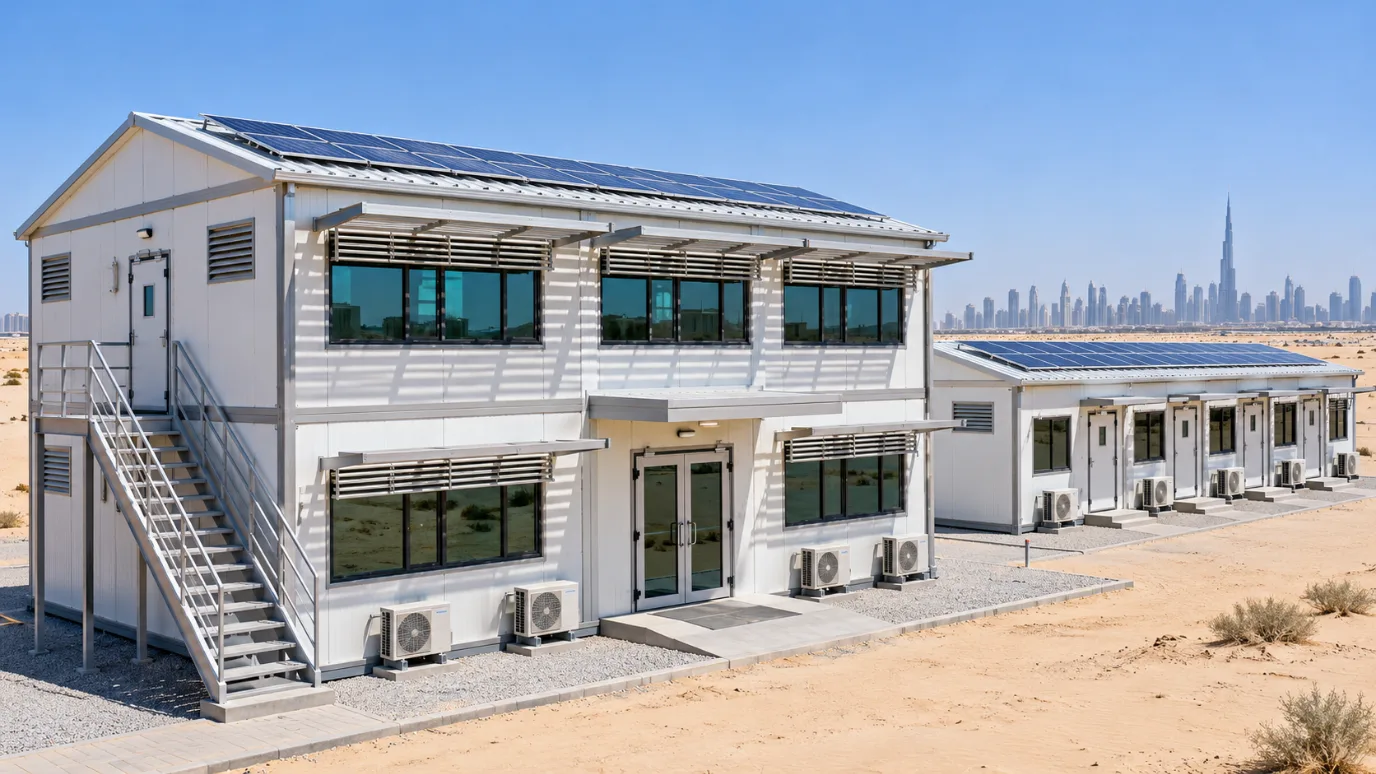
The modular construction market in the UAE is generating USD 1,583.2 million in revenue in 2025 and is projected to reach USD 2,755.6 million by 2033. This steady growth is supported by sustainable, climate-responsive design that lets modular buildings in the UAE climate withstand extreme summer temperatures, high humidity, sandstorms, and coastal conditions.
Are modular buildings suitable for hot climates? Continue reading this guide to discover how they withstand extreme temperatures while maintaining effective insulation and cooling.
How Does Extreme Heat Affect Modular Buildings?
Outside temperatures frequently exceed 45°C during the UAE summer, often with high humidity. These conditions place immense stress on poorly insulated modular building materials and internal systems.
Internal Temperature Increase
Metal walls and roofs absorb solar heat and transfer it indoors. This makes the space uncomfortable, especially during peak afternoon hours, which can affect employees’ comfort and productivity.
Material Expansion
The extremely hot UAE climate causes modular building materials to expand. The steel framework and components expand during hot afternoons and contract as temperatures drop at night. Over time, this repeated movement can put pressure on panels, joints, and structural connections.
Higher Cooling Demand
Poor modular building insulation in the UAE allows heat to enter through roofs, walls, and windows, which increases the workload on air conditioning systems. As a result, cooling equipment consumes more electricity, leading to higher energy bills and increased equipment wear.
What Insulation Is Used in Modular Buildings?
Insulation is one of the most important components of specialised modular buildings, as it directly affects indoor comfort, cooling requirements, and energy consumption. Here is the insulation used in modular buildings in the UAE climate.
Wall Insulation
Modular building walls are commonly filled with fibreglass batts, spray foam, mineral or rock wool, and rigid foam boards such as polyisocyanurate (PIR), EPS, or XPS. These materials limit heat flow into the building and also improve acoustic control, which makes the interior feel quieter and more comfortable.
Roof Insulation
The roof of a modular building receives the strongest solar radiation, so it needs thicker insulation than the walls. Specialised roof assemblies incorporate PIR, PU, or mineral wool insulation beneath protective metal sheets or roofing membranes, which significantly reduces the heat entering the space.
Insulated Sandwich Panels
Insulated sandwich panels are widely used in specialised modular construction in the UAE. They consist of an insulating core, typically PIR, PU, or mineral wool, placed between two protective metal sheets. They are commonly used in modular offices, control rooms, accommodation units, and industrial facilities across the UAE.
Energy-Efficient Glazing
Double-glazed units with low-emissivity (Low-E) coatings and solar-control glazing help reduce the heat entering through window openings. Adding tinted or reflective glass further reduces glare and keeps rooms cooler without relying on heavy air conditioning.
If you are comparing units for a project, our porta cabin buying guide explains how to evaluate insulation before you buy.
How Do Modular Buildings Stay Cool in the UAE?
Keeping modular buildings cool is particularly important for people working in site offices, industrial facilities, and accommodation units. Here is what keeps a modular building cool in a region with extreme weather.
Air Conditioning Systems
Air conditioning systems in modular buildings include indoor cooling units, outdoor condensers, refrigerant piping, thermostats, and air distribution components. Split units are commonly installed in smaller site offices and accommodation modules, while ducted and variable refrigerant flow (VRF) systems serve larger facilities and multiple rooms.
Reflective Roofing Materials
Modular buildings use TPO (thermoplastic polyolefin) membranes, PVC roofing membranes, elastomeric reflective coatings, silicone roof coatings, and pre-painted light-coloured Galvalume steel sheets. These materials reflect solar radiation efficiently and keep the roof surface cooler.
Shading and Orientation
Aluminium sunshades, steel canopies, horizontal overhangs, vertical fins, and external louvres around windows and entrances block intense sunlight. As for orientation, modular buildings are positioned to minimise exposure to the harsh eastern morning and western afternoon sun.
Airtight Construction
Manufacturers use EPDM rubber gaskets, silicone sealants, polyurethane foam, weatherstripping, and insulated panel joint systems to seal doors, windows, roof connections, and wall panels. This prevents hot air, fine sand, and dust from entering modular buildings.
How Are Modular Buildings Protected from Humidity?
Here are the specialised engineering measures manufacturers build into modular buildings in the UAE climate to protect them against high humidity.
Moisture-Resistant Materials
Specialised modular buildings use fibre-cement boards, PVC wall panels, treated steel sheets, and moisture-resistant interior boards to prevent swelling, mould growth, and surface damage in humid coastal areas such as Dubai and Abu Dhabi.
Ventilation Systems
Mechanical ventilation systems, exhaust fans, air handling units (AHUs), and dehumidifiers remove moist air from modular kitchens, bathrooms, and enclosed spaces while keeping indoor humidity within a healthy range.
Waterproofing
TPO, PVC, and EPDM rubber roofing membranes, polyurethane waterproof coatings, sealed floor systems, and EPDM gaskets stop moisture from entering the structure, especially during heavy rain and washdown or cleaning activities.
Condensation Control
Vapour barriers, continuous insulation, thermal-break connectors, and sealed wall joints, combined with proper ventilation and dehumidification, reduce condensation and moisture build-up inside walls and ceilings.
How Is Corrosion Prevented?
Humidity, salt-laden air, and moisture, particularly in coastal and industrial areas, can accelerate corrosion. Here is what protects modular buildings from these conditions.
Protective Steel Coatings
Zinc-rich primers, epoxy intermediate coatings, polyurethane topcoats, and powder coatings are applied to steel frames, roof sheets, and external panels to provide strong protection.
Galvanized Components
Hot-dip galvanised steel frames, zinc-coated fasteners, galvanised brackets, and support beams protect the structural framework of modular buildings.
Regular Maintenance
Routine inspections include paint touch-ups, anti-corrosion sprays, freshwater washing, coating inspections, and drainage checks that extend the service life of a modular building.
Marine-Grade Materials
For coastal or industrial sites, stainless steel fixings and marine-grade aluminium offer superior resistance. They cost more upfront but reduce repair and replacement expenses, which is why they are standard in marine accommodation modules.
How Do Modular Buildings Handle Sand and Dust?
Here is how modular buildings in the UAE climate are designed to keep sand and dust out and protect indoor comfort, air quality, and equipment performance.
Sealed Windows and Doors
EPDM rubber gaskets, silicone sealants, compression weatherstripping, double-glazed units, and tightly fitted aluminium or steel door frames prevent fine sand and dust from entering through openings.
Air Filtration Systems
Modular buildings incorporate MERV-rated HVAC filters, HEPA filters, pre-filters, and filtered air handling units (AHUs) that trap airborne dust before it circulates indoors. This protects occupants’ health and prevents dust from damaging sensitive equipment, such as the servers in modular data centres.
Protected Ventilation Openings
Weatherproof louvres, insect mesh screens, sand traps, dust-filter housings, and protected fresh-air intake hoods allow airflow while reducing dust intrusion.
Exterior Maintenance
Maintenance teams use pressure-washing equipment, soft cleaning brushes, compressed-air cleaning tools, and replaceable intake filters to remove accumulated dust from roof panels and the exterior surfaces of modular buildings.
How Can Energy Efficiency Be Improved in Modular Buildings?
Energy efficiency is an important consideration in modular construction, from site cabins to prefab homes in the UAE. Here is how manufacturers incorporate energy-saving features and technologies to reduce electricity consumption.
High-Performance Insulation
Upgrading wall and roof insulation with PIR insulation boards, polyurethane foam, mineral wool, fibreglass batts, insulated sandwich panels, and reflective vapour barriers reduces heat transfer, minimises cooling loads, and helps maintain comfortable indoor temperatures.
Efficient Cooling Systems
Inverter-driven air conditioners, variable refrigerant flow (VRF) systems, energy-efficient compressors, programmable thermostats, zoning controls, and high-efficiency air handling units (AHUs) can reduce unnecessary electricity consumption.
LED Lighting
LED panel lights, recessed LED downlights, motion sensors, occupancy detectors, daylight sensors, and programmable lighting controls reduce electricity consumption, minimise heat generation, and prevent unnecessary lighting in unoccupied areas.
Solar Energy Systems
Rooftop solar photovoltaic (PV) panels, mounting brackets, solar inverters, DC isolators, electrical protection devices, and monitoring systems convert sunlight into usable electricity, which reduces grid dependence and long-term operating expenses.
Conclusion
With the right insulation, cooling, sealing, and corrosion protection, modular buildings in the UAE climate stay comfortable, durable, and efficient through extreme heat, humidity, sand, and salt air. For a wider view of the method, read our complete guide to modular construction in the UAE.
Accent UAE designs and manufactures climate-ready modular buildings for every emirate, from porta cabins to offices and accommodation. Contact our team to discuss the right specification for your site.
FAQs
Do modular buildings stay cool during summer?
Yes, when properly insulated. Insulated panels, reflective roofing, quality glazing, and correctly sized air conditioning keep interiors comfortable even in peak summer temperatures.
What insulation is best for modular buildings?
PIR and polyurethane sandwich panels offer excellent thermal performance, while mineral wool adds fire resistance and sound control. The best choice depends on budget, building use, and safety requirements.
Can modular buildings withstand desert conditions?
Yes. Sealed envelopes, filtered ventilation, and durable coatings protect against heat, sand, and dust. Regular cleaning and inspection ensure reliable performance in desert environments.
How are modular buildings protected from corrosion?
Protection comes from galvanized steel, protective coatings, and marine-grade components, along with routine maintenance. Together, these measures prevent rust, even in humid coastal locations.
Are modular buildings energy efficient?
Yes. Factory precision creates airtight, well-insulated structures, and features like efficient cooling, LED lighting, and solar power can significantly reduce energy consumption and operating costs.