
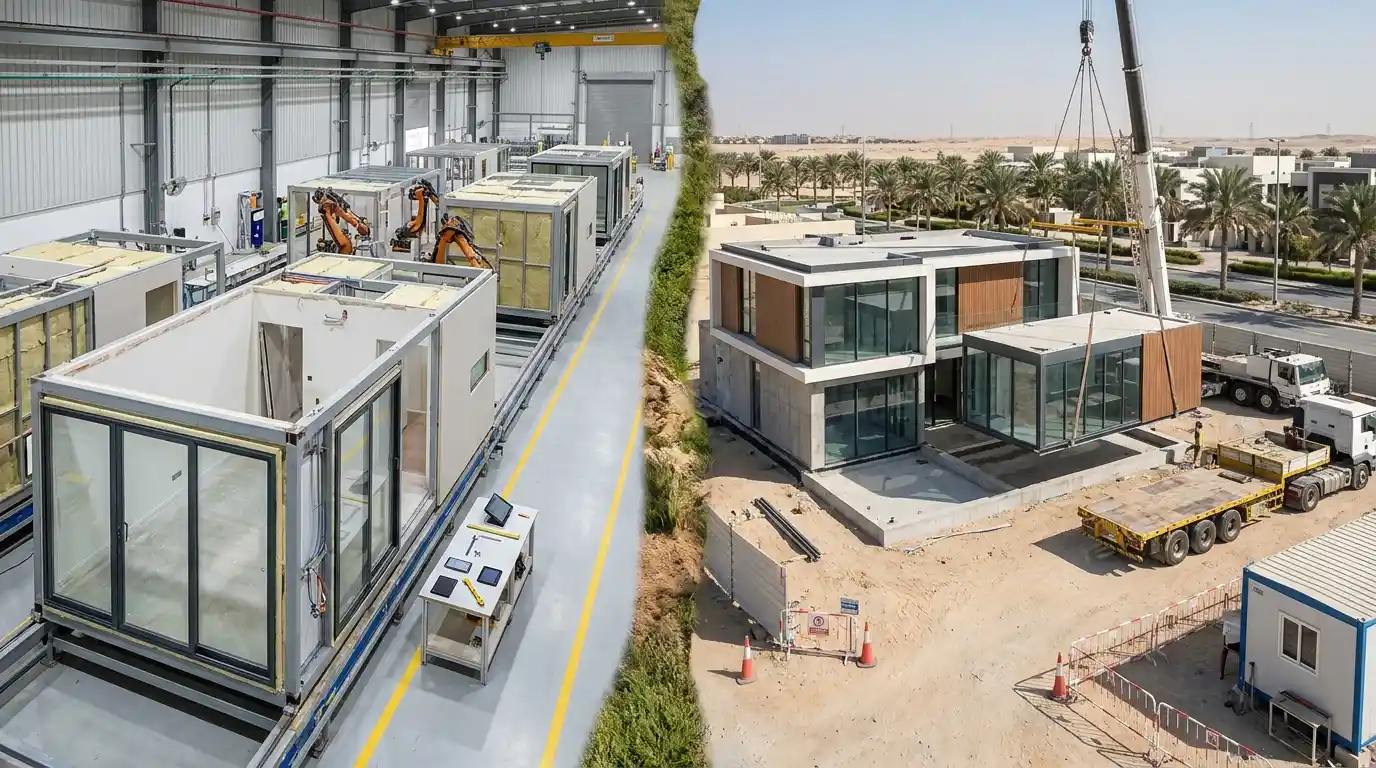
Purchasing a house is a major step. And when that house is a prefabricated one, the task becomes a challenge. When it comes to comparing a prefab vs traditional house, prefabs are built in factories and assembled on-site.
But there are certain factors that you need to consider before buying prefab homes UAE. These include knowing the types of houses available in your domain, their manufacturing, and costing. Apart from this, all the legal approvals you need before setting one up, and whether they will be able to survive in the UAE climate.
Look deep into all these factors, and if you receive a green flag, then choose a reliable prefab home manufacturer to get the task done.
What is a Prefab Home?
A prefabricated home, often known as a prefab home, is a house that is manufactured off-site in advance, usually in standard sections that can be easily shipped and assembled. Different from the traditional ones that are built on-site, these homes are constructed in a factory-controlled environment and then transported to the final building location for assembly. The main idea behind these houses is to be both time- and cost-efficient.
Prefab Homes Vs Modular Homes Vs Mobile Homes
Before we move into the details of the factors that need to be considered before buying prefab homes UAE, one confusion needs to be cleared. A prefab home, a modular home, and a mobile home are three different kinds of homes.
|
Feature |
Prefab Homes |
Modular Homes |
Mobile Homes |
|
Basic |
Homes that are made partly or fully off-site and then assembled at the property. |
The parts of modular villas UAE are built in a factory and joined on-site. |
The complete home is built in the factory and then transported from one place to another. |
|
How they reach the site |
Parts and panels are transported to the property. |
Complete sections are transported to the site. |
The finished home is transported to the site. |
|
How they are installed |
All the components are assembled at the property. |
Sections are connected and finished on-site. |
No assembling on site. The complete house is placed on a prepared site. |
|
Mobility |
Usually meant to stay in one place. |
Generally permanent once installed. |
Designed to be moved when needed. |
|
Customization |
There is a wide range of design choices. |
It offers many layout and finish options. |
Customization is limited. |
|
Construction time |
Usually faster compared with traditional construction. |
Completed much faster than site-built homes. |
The quickest to manufacture and install. |
|
Cost |
Ranges from budget-friendly to high-end. |
The high-quality ones are expensive. |
One of the most affordable options. |
5 Things You Need to Know Before Buying a Prefab Home in the UAE
Buying a prefab home UAE is not an easy task. You need to check for some of the features like the available options, the legal documentation, and the manufacturing process of the available options. Apart from this costing of the houses is also an important factor. Find out the details of the things you need to know to prevent regret in the future.
-
Types of prefab homes available
The first and foremost important element that you need to check when you are buying prefab homes UAE is the types of homes available. Dubai has vast options from single-storey to guest houses and extensions.
Single-storey prefab homes
A popular choice for smaller plots and family living. These houses often include four rooms, like a bedroom with an attached bathroom, a kitchen, and a living room. The design can be simple to premium. These homes are easy to transport, install, and maintain.
Modular villas
Modular villas are made from factory-built sections that are joined together on-site. They look and feel like conventional villas, with homeowners choosing different layouts, finishes, and features. You can use modular building systems in Dubai if the required regulations are met.
Multi-storey prefab homes
Multi-storey prefab homes use factory-made sections to create two or more floors. You need to pass through a careful structural planning stage, especially for foundations, connections, and load-bearing systems. Additionally, your design must meet local building requirements before construction begins.
Guest houses and extensions
Last but not least, prefab units work well as guest rooms, home offices, or villa extensions. They are useful when extra space is needed without doing major work in the existing house. But these houses in Dubai need relevant permits.
-
How prefab homes are built
The second factor that you need to consider when you are buying a prefab home is the construction process. From designing to assembling the parts on-site, none of the steps can be ignored.
Design and engineering
The process begins with drawings and engineering plans. The designers decide the floor plan, materials, structure, electrical work, plumbing, and cooling needs. It is important that the design suits the plot and meets all the building requirements that are set by the relevant UAE authorities.
Factory production
Once the design is approved, the prefab home construction process begins inside the factory. All the walls, floors, roofs, and other components of the house are produced under controlled conditions. This improves quality control and reduces delays that are caused by weather or site conditions.
Interior finishing
Most of the prefab homes are partly or fully finished before delivery. Flooring, wall finishes, doors, lighting, kitchens, and bathrooms are all installed at the factory. This reduces the amount of finishing work needed after the home reaches the site.
Site assembling
The final stage of the manufacturing process is the assembling of the parts on-site. The finished sections are transported to the property and placed on the prepared foundation. The on-site labor force connects the modules, seals the joints, completes services, and finishes all the remaining work. Before declaring the project as completed, final inspection is carried out before the home is handed over to the consumers.
-
Costing of these homes in the UAE
Costing is one of the essential elements when investing in a prefabricated home. While these homes are generally more affordable than traditional ones, it is important to set a budget for them.
Size and floor plan
This is something obvious that a large home will cost more compared to a small one. This is because more material is used, the higher the number of labor required, and an increase in the transportation cost. Choosing complex floorings will add extra to the budget. Therefore, if you are at an initial stage, it is better to choose a simple layout.
Construction materials
Another important component of prefab home cost UAE is the materials you choose for frames, walls, roofs, insulation, and finishes, which affect the total cost. There is a price difference between steel, concrete, and composite panels. Choose those options that balance cost, durability, and work well with the UAE climate needs.
Interior finishes
Basic finishes can keep the budget lower. Choosing premium flooring, customizing kitchens, and smart-home systems increases the final price. It is better to compare quotations from different companies and only choose those elements that are essential.
Foundation and site work
The prefab home parts are made in a controlled setting, but you need to invest some part of your budget on preparing the site. You need to clean it, lay the foundation, and then connect all the utility lines to make the house accessible. Difficult conditions of the ground can increase the cost.
Transportation and installation
Now comes the final part of the cost. You cannot ignore the transportation and installation cost. The delivery distance, access to the plot, crane rent, and installation work affect the budget. When you are setting the budget, do not ignore these amounts.
-
Legal approvals from the UAE government
No matter how different these homes are from the traditional ones, they cannot ignore the prefab home approval UAE step. The requirements vary, and they are handled by Dubai Municipality and its building regulations.
Municipality approval
The concerned municipality or planning authority cross-checks all the proposed buildings against local rules. In Dubai, permits cover residential villas and other building types. Planning matters such as land use, setbacks, height, and parking sometimes also apply.
Structural approval
Building a two-storey house in Dubai needs to pass through an approval stage. Engineers need to submit structural drawings, calculations, foundation details, and a material specification list to the concerned departments.
Civil defence requirements
The fire and life-safety requirements become essential depending on the building. You might need to install fire protection systems, alarms, and emergency evacuation systems. This approval plan depends on the type of project you are working on.
Utility connection approval
Additionally, the electricity, water, drainage, and other services installed in the houses need to be connected through relevant authorities and the providers. Again, the requirements will vary depending on the location and the utility provider.
-
Prefab homes suitable for UAE climates
Finally, you need to check that the prefab homes UAE you are setting up can bear the UAE heat and cold climate. They must have proper heating and cooling systems to keep the inside temperature ideal for users.
Thermal insulation
A good insulation system will reduce the heat entering the home. This saves electricity as the cooling plants will work in a better way. When you are designing these houses, choose walls, roofs, windows, and doors according to the UAE’s high outdoor temperature.
Air conditioning requirements
A person cannot think of a house in Abu Dhabi without air conditioning. Therefore, you need to design prefab homes for hot climates with suitable air conditioning capacity. Poor planning can lead to higher use of energy and less comfortable indoor spaces.
Humidity protection
Dubai and Abu Dhabi are coastal areas, and they experience high humidity. The houses should have proper sealing, ventilation, waterproof features, and moisture-resistant materials. Adding good detailing around windows, roof, and joints will prevent moisture-related problems.
How to Choose a Prefab Home Manufacturer
With an idea of all the details that you need to know when you are buying prefab houses Dubai, it is time to look for a manufacturer who can help you. A company with green ticks across all these boxes is the one that is the best in town.
-
Positive reviews on completed projects
Before you choose a manufacturer, go through the reviews on all the completed projects. Check for the quality of the finishes, layout, materials, and the overall workmanship. You can ask for real photos or visit their sites if possible. This gives a better idea of what the manufacturer will actually deliver.
-
Compare the technical specifications
Never compare your manufacturers based on only prices. Check through their technical details. Look at the structure and the quality of insulation, windows, and electrical systems they have used in their previous projects. A cheap quotation will not provide the same quality or features as an expensive proposal.
-
Check approval experience
Prefab homes need to meet local requirements in the UAE. Ask your manufacturer if they have handled the same kind of projects in the past. An experienced company will understand the municipality requirements, drawings, structural submissions, and other technical documents that are required for your project.
-
Understand warranty coverage
Read the warranty terms thoroughly before you sign a contract. Check out the things that are covered and the duration of the warranty. Ask about prefab home lifespan, structural defects, water leaks, electric system failure, and equipment maintenance. Clear warranty terms can save you from unexpected costs in the future.
Conclusion
Prefab homes UAE offer more than a faster way to get a house. It is a new way to update your lifestyle in the UAE. These homes are smart, sustainable, and fulfill modern needs. Whether you are downsizing, building your home, or setting up a retreat space, these homes offer real flexibility with no loss in comfort or style.
Frequently Asked Questions
How long do prefab homes last?
A well-built prefab home can last for many decades. Its lifespan depends on the materials, construction quality, maintenance, and climate protection. In the UAE, good insulation, waterproofing, and corrosion protection are especially important for keeping the home in good condition.
Can prefab homes be customized?
Yes, prefab homes can be customized. You can usually choose the floor plan, room sizes, doors, windows, finishes, kitchens, and bathrooms. Some manufacturers also offer custom exterior designs. However, major changes may increase the cost and production time.
Are prefab homes cheaper than conventional homes?
Are prefab homes cheaper than conventional homes?
They can be, but not always. Prefab construction may reduce labour time, material waste, and site work. However, transportation, foundations, approvals, and premium finishes can increase the final cost. Comparing complete quotations is the best way to see which option offers better value.
Can a prefab villa have multiple floors?
Yes. Prefab villas can be designed with two or more floors. The structure, foundation, connections, and lifting process need careful engineering. The design must also meet the building requirements of the relevant UAE authority before construction and installation begin.