
Will you believe that it is possible to reduce the cost of construction by 20% and complete your projects 50% faster? And the good news is this is true.
Modular construction cost savings help in achieving this. You can save on costs through faster project timelines, lower material waste, and reduced labor costs. This is a rapidly growing manufacturing process that is used by architects, engineers, and construction managers. The eco-friendly form of prefabrication creates buildings with superior structural integrity in less time and cost.
Find out how modular construction saves your money and resources and what the hidden secret is that is making it a popular option.
What is Modular Construction?
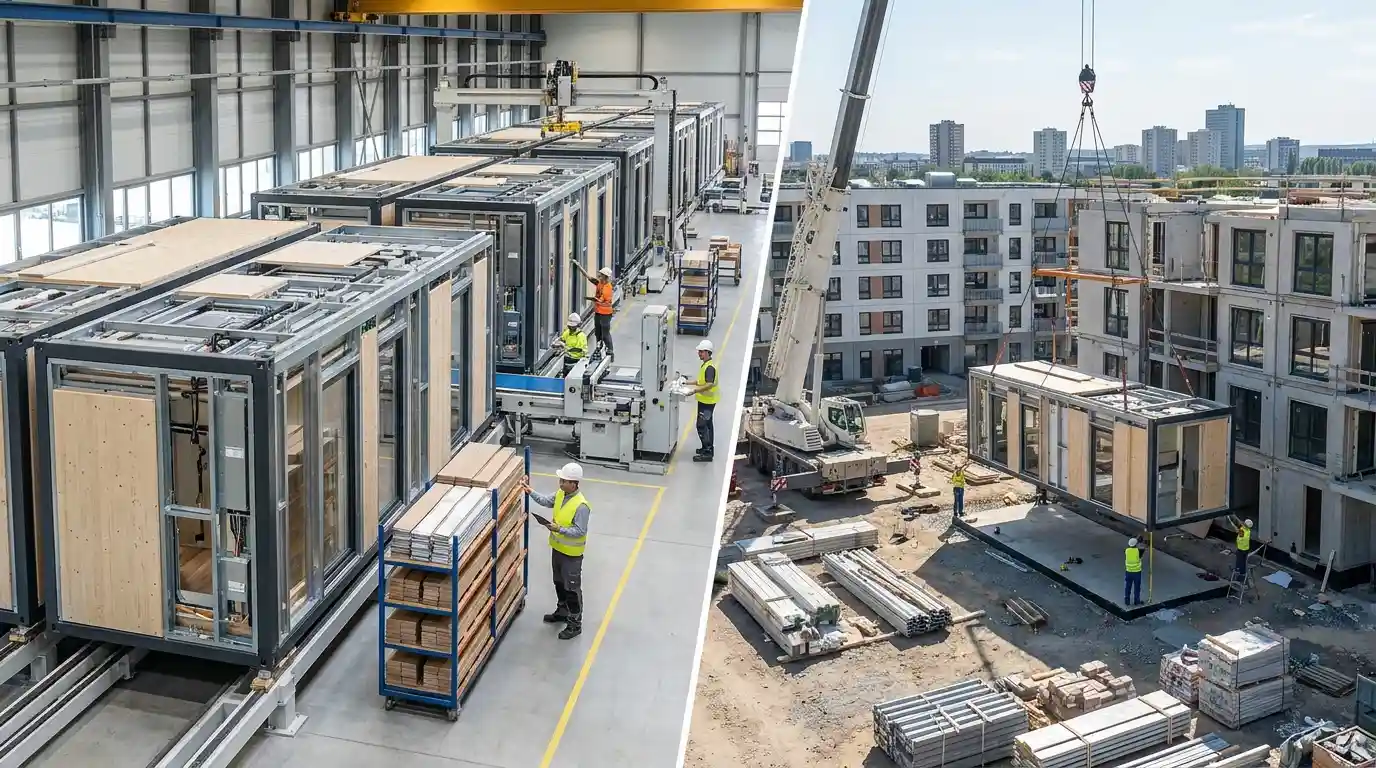
Modular construction is one of the fast construction methods. It is a process of creating buildings using an off-site environment, creating prefabricated modules of a building. These sections, known as modules, are shipped and assembled at the construction site. Unlike traditional construction, where the process is completed at the construction site, this mode speeds up the timeline by working on different parts of the project simultaneously.
Why Do Traditional Construction Projects Face Delays?
Before we get to the details and find out how modular construction cost savings work, let’s check some of the reasons traditional construction projects face delays.
-
Weather-related delays
One of the things that we cannot control during construction is the changing weather conditions. If you know the way through which extreme conditions can be controlled, it will provide you enough time to prepare. The traditional construction crew has to either work in those conditions or take off until the weather settles down.
-
Labor and material shortages
Another big issue in traditional construction is the shortage of labor. During the pandemic, companies had to lay off workers, and those individuals got jobs in other industries. The younger generation is not committed to construction careers. Apart from all these issues, the increasing cost of raw materials stops construction industries from buying materials. As a result, traditional construction takes months and years to deliver final products.
-
Lack of good communication
When there is a communication gap, the projects get delayed, and in some cases the work takes the wrong path. In such situations, keep all the concerned people in the loop and let them know all the changes.
How Modular Construction Saves Time?
Time is money in commercial, industrial, and government projects. Modular construction cost savings mode bridges this gap, helping to deliver finished and high-quality products in a short time.
-
Off-site and on-site work happens simultaneously
This is one of the biggest steps in saving time. While your site is being cleared, and foundations and services are prepared, the building itself is being fabricated in a factory. Both tasks run parallel rather than one after the other. When the modules are ready, they are transported and craned into place.
-
Weather does not hinder construction
Be it rainy, extremely hot, or windy outside, these will never disturb the workflow. As modular construction happens inside a controlled facility, fabrication keeps moving regardless of what is happening outside.
-
Fewer defects, less rework
Building in a controlled environment with repeatable processes and quality checks at all stages leads to fewer errors. And if there are any errors, you can catch them at an early stage. Less rework in the project keeps the schedule tight and fulfils the modular project timeline, instead of losing time chasing problems after the build is finished.
-
A managed and predictable supply chain
Materials are produced and stored centrally at the fabricated facility rather than trickling into a remote site. This removes one of the most common causes of delay, waiting on deliveries or trades to arrive at a hard-to-reach location. This keeps the build moving to plan.
How Modular Construction Reduces Costs?
Modular construction not only helps in saving time, but you can also save a huge amount to disturb your budget. Evaluate the elements that play a vital role in modular construction cost comparison.
-
Better material planning
Modular construction leads to savings in material costs. Within a factory, precise measurement and accurate cutting of materials are routine. This results in construction waste reduction. Additionally, much of the work for this mode is done within a factory; bulk purchasing of materials is possible. This further results in lowering the cost.
-
Reduced labor requirements
Another area where modular construction cost savings work is the labor sector. This is because building modules off-site requires fewer workers. A smaller number of workers leads to lower wages that are market competitive and less of a burden on the budget.
-
Tax savings
With all this, we cannot ignore the taxes paid according to a set government standard. Modular construction leads to cost savings, especially because of faster depreciation. The accelerated depreciation results in higher depreciation deductions, reducing taxable income.
Which Project Costs Can Be Reduced?
Adding modular construction cost savings mode in hiring labor, renting equipment, keeping goods, and one supervisor controlling everything will lead to minimum budgets.
-
Site labor costs
Modular work shifts tasks to the factory, meaning fewer people are needed on-site. This results in reduced wages and overtime expenses with daily site disruption.
-
Equipment rental costs
There are often situations when equipment and modern gadgets are needed to conduct a process. Companies often get them on rent. Once the project finishes, equipment is returned. No need to keep cranes, lifts, and generators for a longer time, reducing rental pressure.
-
Material storage costs
You need less space to store and prepare materials on-site. This helps on tight urban plots, where space is expensive and limited.
-
Project supervision costs
One of the off-site construction benefits is that when your labor is working within the factory, you don’t need to hire another supervisor for the site. A single one can supervise the work on-site and off-site.
What Factors Can Increase Modular Building Costs?
With modular construction being a cost-effective construction methods, certain factors can increase the cost over the budget.
-
Custom architectural designs
If you get into complex customization, the cost benefit associated with the modular building no longer exists. An unusual design demand usually means you need to hire someone expert in planning and adjustments. This adds more to the budget frame.
-
Premium finishes
Luxury flooring, high-end fixtures, and special facades increase the budget fast. Modular buildings still use the same materials and codes as traditional ones, the premium choices will add cost.
-
Difficult transportation routes
Factory-built construction benefits include that modules are made in a factory and assembled on site. Transporting them to harder routes can add extra cost, as these require larger and more professional trucks. Long distances, narrow roads, bridge limits, or special permits can make delivery more expensive.
-
Complex site conditions
Uneven ground, limited access, and tricky foundations can increase the cost of installation. Modular construction requires a prepared site for setting and joining the units. If the site is difficult, the project loses the speed and cost benefits.
When Is Modular Construction Most Cost-Effective?
But the question is: How can we make modular construction cost-effective? Read further to unlock this secret.
-
Repetitive building layouts
This mode will work perfectly when the same unit is repeated again and again. This is one of the reasons that apartments, student housing, and hostel-style layouts are the best fit for this model.
-
Remote project locations
Remote sites often benefit from factory-made modules because fewer workers and less material need to stay on location for long. This makes the planning stage simple with labor shortages or limited site support.
-
Projects with short deadlines
When time is the strength, modular construction is the right fit. The site and factory work happens at the same time, cutting the delivery time.
-
Multi-phase developments
Large developments with repeat units across phases are a good fit for modular construction. A steady pipeline helps factories plan better and keep costs under control.
Modular vs Traditional Construction Cost
Find out how modular construction is different from traditional construction in terms of cost. For most of the construction, modular is considered expensive.
-
Initial construction costs
Initially, the price tag might look the same, and sometimes modular construction might seem higher at the start. But this is just a snapshot. Savings will reflect when labor, time, and scale are optimized properly, especially on repeated projects.
-
Long-term maintenance costs
Maintenance can be close to traditional construction because modular buildings use the same codes and materials. The difference is that factory-controlled work can improve consistency and reduce rework.
-
Whole-life project value
Whole-life value is often where modular shines. Faster delivery means users can move in sooner, and revenue can start earlier. This helps improve the overall value of the project, not just the upfront cost.
Conclusion
Modular construction cost savings mode is changing the way projects are built. It saves time, lowers waste, and helps control costs. It is ideal for fast-moving and large-scale projects. Sometimes designs and site conditions can add extra expense, but modular construction still offers strong value overall.
Frequently Asked Questions
How much time can modular construction save?
It can save a lot of time. Many projects finish much faster because factory work and site work happen at the same time. In some cases, it can cut the schedule by weeks or even months.
What affects modular construction costs?
The cost depends on design, size, transport, and site conditions. Fancy finishes and custom shapes can increase the price. A remote site or a difficult delivery route can also make it more expensive.
Is modular construction suitable for large projects?
Yes, it is. Modular construction works well for large housing, hotels, schools, and office projects. It is even better when the same unit is repeated many times.
Does modular construction reduce labour costs?
Yes, it often does. More work happens in the factory, so fewer workers are needed on the site. That means less time, less overtime, and fewer labour-related delays.